Ottoman Classical Music the Musical Art of Turkey
Main Torso
Chapter ii Turkish Classical Music & Instrumentation: A History in the Sound of Music
by Noah Bayindirli
Music in Turkey produces familiar tones in the mod solar day, but its origins and by implementations may come as a surprise to some. Throughout the ages, Turkish music has grown and transformed dramatically, influencing issues every bit diverse as religion, social interaction, politics, and civil disobedience. From the late Ottoman Empire to Atatürk's Republic, or fifty-fifty among the vast drove of instruments and its impact on musical structure, Turkey has truly had its mitt in every facet of this art form. Provided this immense face of Turkish culture, this chapter focuses on classical Turkish music and its development, get-go in the Ottoman Empire.
Turkish music as we know it today has its roots in the menstruum of Ottoman rule. Although the bulk of its development took identify under the reign of the sultan, the sound of Turkey was greatly influenced by surrounding cultures and their musical traditions. These include the Arabs, Persians, and fifty-fifty the Byzantine (Eastern Roman) churches of Istanbul, bringing with them their musical techniques and methodologies.
Initially a ladylike art, classical music existed mainly inside the walls of the Ottoman palace. Classical music eventually moved out and into the streets of the empire. From performances within the regal harems—for women, past women—these practices made their fashion to the public via male street performers, or rakkas. While their movements were part of the "belly dancing" canon, rakkas utilized the Çiftetelli rhythm and played zils (finger instruments) masterfully to accompany their dance. These dancers took this music, technique, and functioning to a variety of celebrations in Turkey, including feasts, weddings, and festivals.
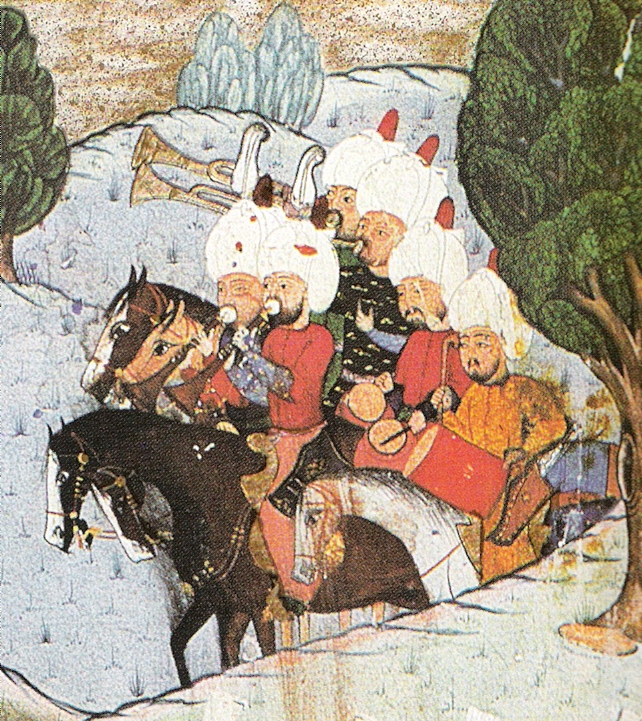
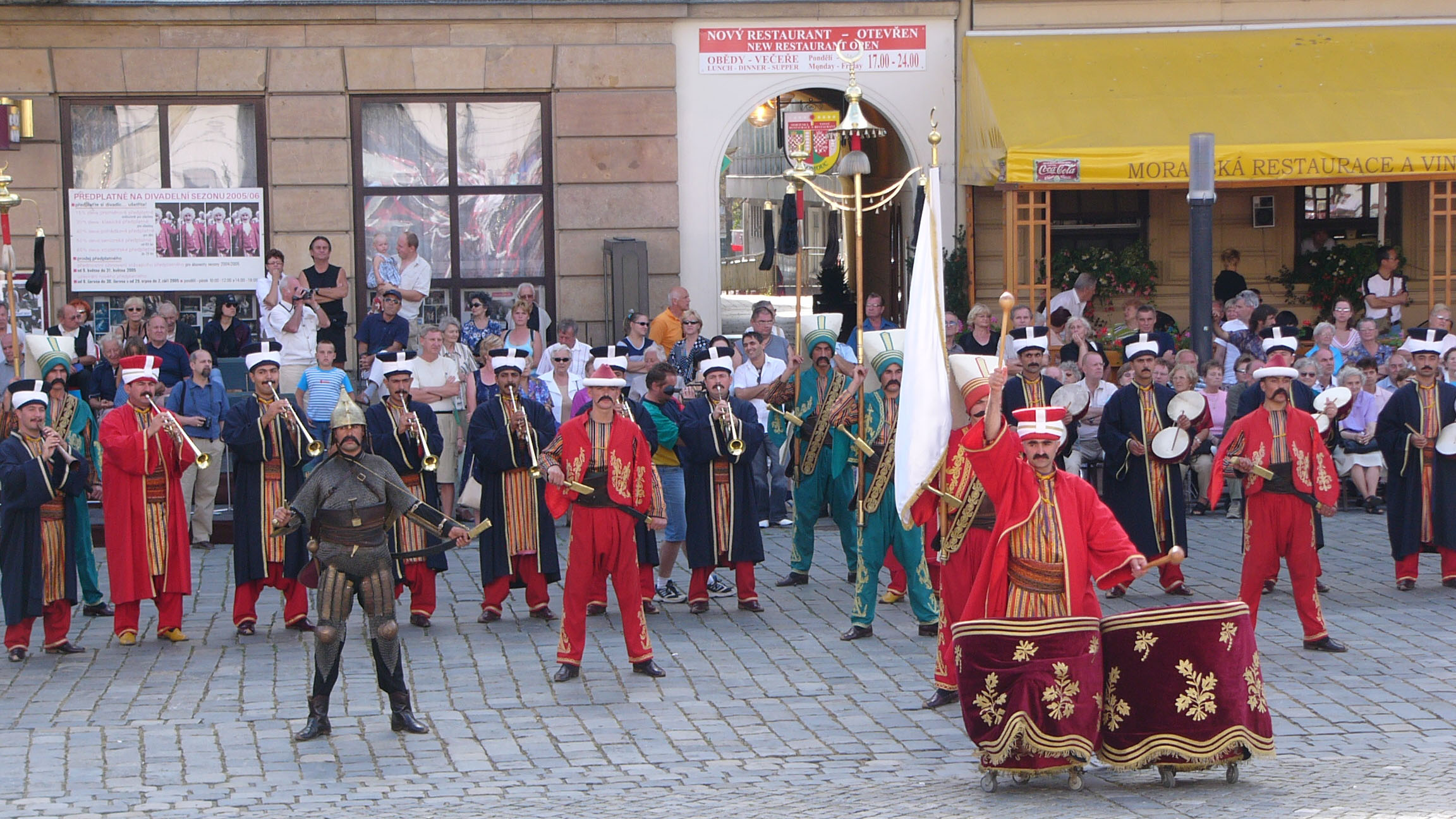
A further implementation of music within the Ottoman Empire is that of the Mehter, or Ottoman armed forces band, which utilized kös drums and zurnas (a relative of the oboe) to follow the army into boxing and instill strength and backbone through sound. These bands served equally a symbol of sovereignty and independence for the empire and followed the Çorbacibasi, or band commander.
Along with the meaning impact of courtly sensibilities on the development of Turkish music, it encompasses a rich diversity of folk traditions. From the classical çeng, reminiscent of an open harp, to the folk Kabak Kemane, or "gourd fiddle", Turkish folk instruments vary greatly in size, shape, sound, and style. With this incredible array of instruments comes a notable drove of musical types and patterns.

The principle of makam, loosely understood as a rule of limerick, profoundly shaped Turkish music theory. Information technology is a musical scale progression creating patterns of note, scale, and structure. Although there are hundreds of makams, many mutual to Central Asia and the Mediterranean region, very few are formally defined. Interestingly, Sufi educational activity describes each makam every bit representing and conveying a particular psychological and spiritual state.
Folk music typically falls into two forms: songs (lyrical) and melodies (instrumental), with a variety of sounds from Anatolia and Thrace. There are typically two primary kinds of artists: Türkü singers and the Âsik, bards or minstrels. Although both types of musicians play and sing songs, Türkü typically perform their music anonymously and for a local audition, building off other artists and changing the design and words as they go. In contrast, Âsik utilize their own and other Âsik lyrics, producing sounds outside of the local music culture of where they currently perform. Every bit a result, their music is typically personalized past their own style, voice, and experiences forth their travels.
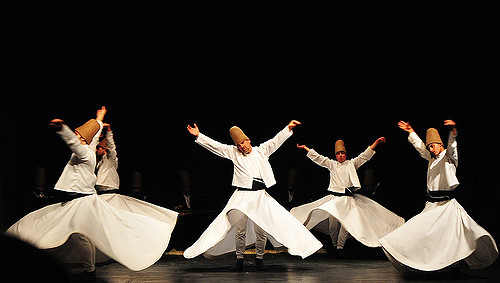
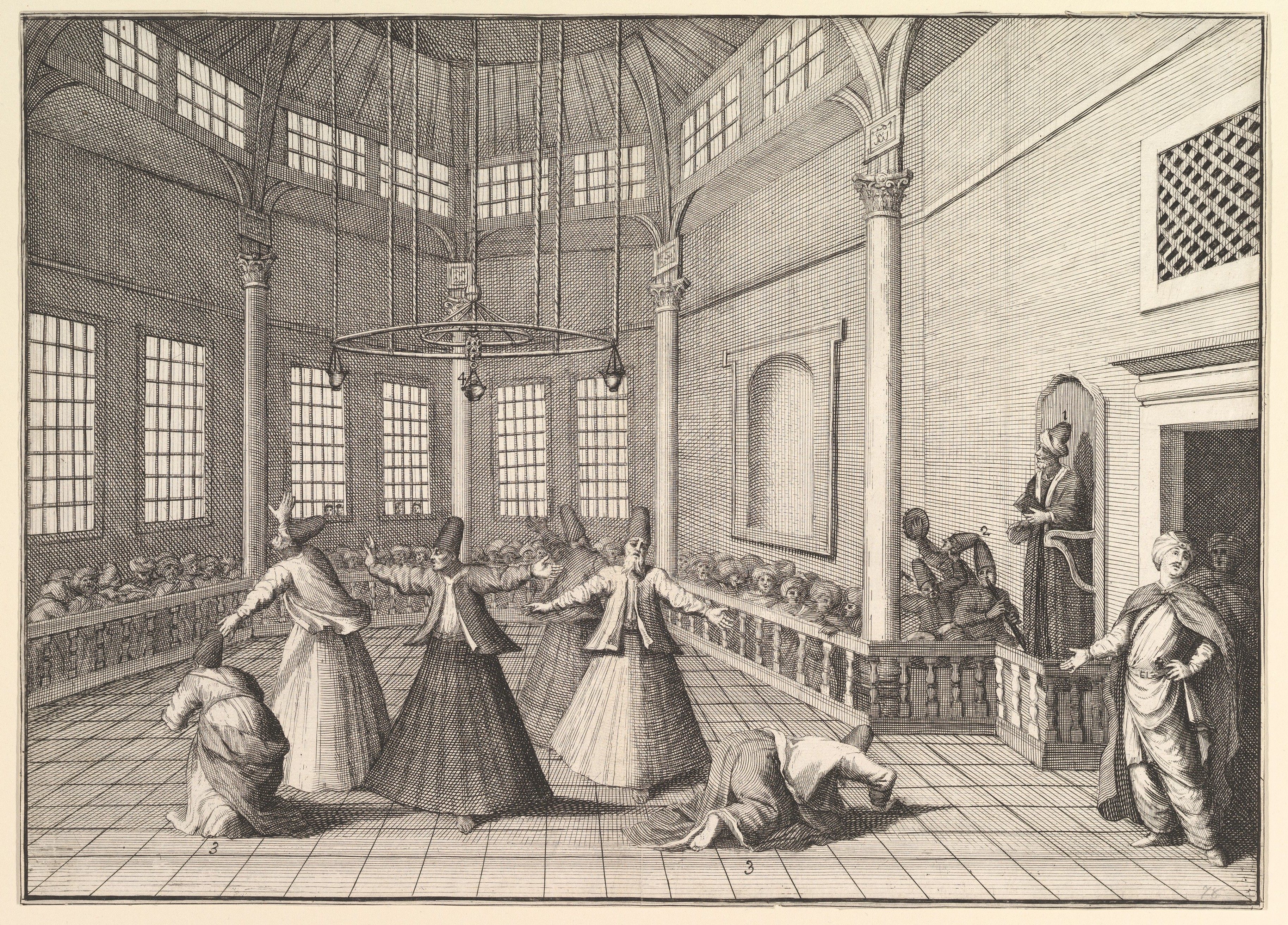
The concluding noteworthy type of music is that utilized by the whirling dervishes, who practice a form of Sama, or "listening," known as Sufi whirling. During this course of active meditation, followers spin in circles while others sing and play instruments, in order to imitate the planets, abandon their egos, focus on God, and reach Kemal (perfection).
The journey through Turkish classical music would not be complete without a look at Atatürk's utilization of the fine art class in his attempt to westernize the Republic of Turkey. During this motion in the early 20th century, Atatürk first changed the location and names of iconic music groups of the nation. For instance, the Imperial Orchestra was relocated from Istanbul to the now-capital Ankara and renamed the Orchestra of the Presidency of the Republic; the Istanbul Oriental Music School employed western-style music teachers and was renamed the Istanbul Conservatory.
In addition to the establishment of orchestras and conservatories, Atatürk utilized engineering science to institutionalize Turkish music traditions. He implemented wide-scale nomenclature and archiving of folk music samples from 1924-1953 and founded the Turkish Radio and Telly Corporation (TRT). Through this country radio provider, the people of the Republic were able to find common ground with news, music, and television, and the effect of westernization was able to travel farther and faster throughout Turkey.
In sum, this chapter shows how the musical developments of classical ladylike styles, folk traditions, war machine band music, sufi musical practices, and a rich assortment of instruments set the background for a broad range of music and social movements in today's Democracy of Turkey.
Works Cited
https://quod.lib.umich.edu/c/ca/7523862.0006.007/–dervishes-dance-the-sacred-ritual-of-dear?rgn=main;view=fulltext
"History." Turkish Classical Music, Turkish Cultural Foundation, www.turkishmusicportal.org/en/types-of-turkish-music/turkish-classical-music-history.
"Makams." Turkish Classical Music, Turkish Cultural Foundation,
http://www.turkishmusicportal.org/en/types-of-turkish-music/turkish-classical-music-makams.
"The Makam Phenomenon in Ottoman Turkish Music." Turkish Classical Music, Turkish Cultural Foundation,
http://www.turkishmusicportal.org/en/types-of-turkish-music/turkish-classical-music-the-makam-miracle-in-ottoman-turkish-music.
"Forms." Turkish Folk Music, Turkish Cultural Foundation,
http://world wide web.turkishmusicportal.org/en/types-of-turkish-music/turkish-folk-music-forms.
"History." Turkish Folk Music, Turkish Cultural Foundation,
http://world wide web.turkishmusicportal.org/en/types-of-turkish-music/turkish-folk-music-history.
"Instruments." Turkish Classical and Folk Music, Turkish Cultural Foundation,
http://world wide web.turkishmusicportal.org/en/instruments.
"Music of Turkey." Wikipedia, Wikimedia Foundation, 29 October. 2017, en.wikipedia.org/wiki/Music_of_Turkey.
"The National Anthem." Turkish Cultural Foundation, Turkish Cultural Foundation, www.turkishculture.org/music/marches-and-anthem-35.htm.
"Military (Mehter)." Turkish Cultural Foundation, Turkish Cultural Foundation, www.turkishculture.org/music/military-mehter-86.htm.
"Sufi whirling." Wikipedia, Wikimedia Foundation, 17 Oct. 2017, en.wikipedia.org/wiki/Sufi_whirling.
"Turkish Radio and Television Corporation." Wikipedia, Wikimedia Foundation, fourteen Oct. 2017, en.wikipedia.org/wiki/Turkish_Radio_and_Television_Corporation.
"Turkish Five." Wikipedia, Wikimedia Foundation, 17 Oct. 2017, en.wikipedia.org/wiki/Turkish_Five.
Source: https://ohiostate.pressbooks.pub/windowsintoturkishculture/chapter/chapter-2/
0 Response to "Ottoman Classical Music the Musical Art of Turkey"
Post a Comment